In November we spent two weeks at the Hi Tech! Stuttgart Startup Welcome Package, Batch #9. The setup is roughly: forty early-stage companies spend their days pitching mid-cap and large-cap German manufacturers in one-on-one Match Arena sessions. We did fifty-six of those sessions in fourteen days. Ciro AI is an AI lab for industrial manufacturing, so half the meetings were our home turf.
I went in expecting questions about the AI. The vision models, the LLM integration, the agent architecture, the proprietary algorithms. We had slides for all of that. Those slides came out maybe three times.
The other fifty-three times, the conversation was different.
The questions we actually got
Ranked roughly by frequency, here is what manufacturers actually wanted to know.
"Does this work with our SAP?"
The single most common question. Not "do you support SAP integration" in some generic sense — they wanted to know about their specific SAP install, which is usually ten to twenty years old, customized beyond recognition by an integrator that has long since left, with a custom IDoc dialect that doesn't quite match any of the ones in the SAP docs.
What worked: showing a concrete IDoc parser, a concrete connector for one of their specific transactions, and saying "we'll spend two weeks of on-site time mapping yours and the data lives in a Parquet store afterwards." What didn't work: gesturing at "we have an SAP connector" in a slide.
"What's the user interface for the line lead?"
Manufacturing is run by people who have been doing the same job for decades, often on aged hardware. The line lead doesn't want a fancy React dashboard with motion graphics. They want a screen that looks like the ISA-101 control room screens they're already used to — gray background, big numbers, alerts that beep when something needs attention.
We built two UIs: one for the office (sales, operations, executive), one for the plant. The plant UI is ISA-101 compliant — same shapes, same colour conventions, same alert hierarchy. That distinction alone closed two of our pilots.
"Will this still work on this machine?"
Pointing at a Windows machine on the corner of the booth that is, on inspection, a 2013-era Dell with an Intel HD Graphics 4000. Yes, the plant floor still runs on machines like that. Yes, our web UI loads on it. We made sure of that. The dashboards degrade gracefully — they work on a Chrome 90 with WebGL disabled, just without the live charts.
"Where does our data live?"
The Germans were especially careful here. Data residency, GDPR, the Schrems II ruling, the question of whether US-headquartered SaaS is even a legal option for their data — all real. We deploy in Frankfurt for German customers (AWS eu-central-1), in Madrid for Spanish ones, in São Paulo for Brazilian ones. The data never leaves the region. The control plane (auth, billing, deployment metadata) is separate and lives in eu-west-1.
Having a one-page architecture diagram that shows exactly where each piece of data lives, who can access it, and what gets logged where closed more deals than any product feature.
"What happens if you go out of business?"
Source-code escrow is back. Several customers wanted contractual assurance that if Ciro AI shuts down, they can keep running. We've settled on a third-party escrow arrangement (the same one Atlassian used to use) plus a documented "self-hosting" SOP that activates automatically under defined conditions. It cost us a week of legal work and turned a handful of "we'll think about it" responses into signed pilots.
What didn't move the needle
A list of things I thought would matter and did not.
- Model benchmarks. Nobody cared which LLM we use. Nobody asked about MMLU scores. The model is plumbing — what matters is what it can do for their workflow.
- Investor logos. StarkWare backing got a polite nod. Nothing more.
- "AI" branding. The word "AI" actively triggered scepticism in roughly a third of the conversations. We started calling it "real-time analytics" and "computer-vision-based QC" — same product, twice the engagement.
- The pitch deck. By day three we mostly opened the live demo and skipped the deck entirely. The deck was for the prep meeting. The demo was for the buyer.
What did
- Concrete case studies. "Here is one of our customers, here are the metrics they had before and after, here is the line lead I can put you on the phone with this afternoon."
- Pilot pricing. Most German manufacturers don't want a pilot they have to budget into capex. A six-week paid pilot, on a fixed price, with a documented success metric and a clear opt-out — that they can buy.
- Spanish language support. Several of the German buyers had LATAM operations. Being a Spanish-native bilingual team turned out to be an unexpected differentiator.
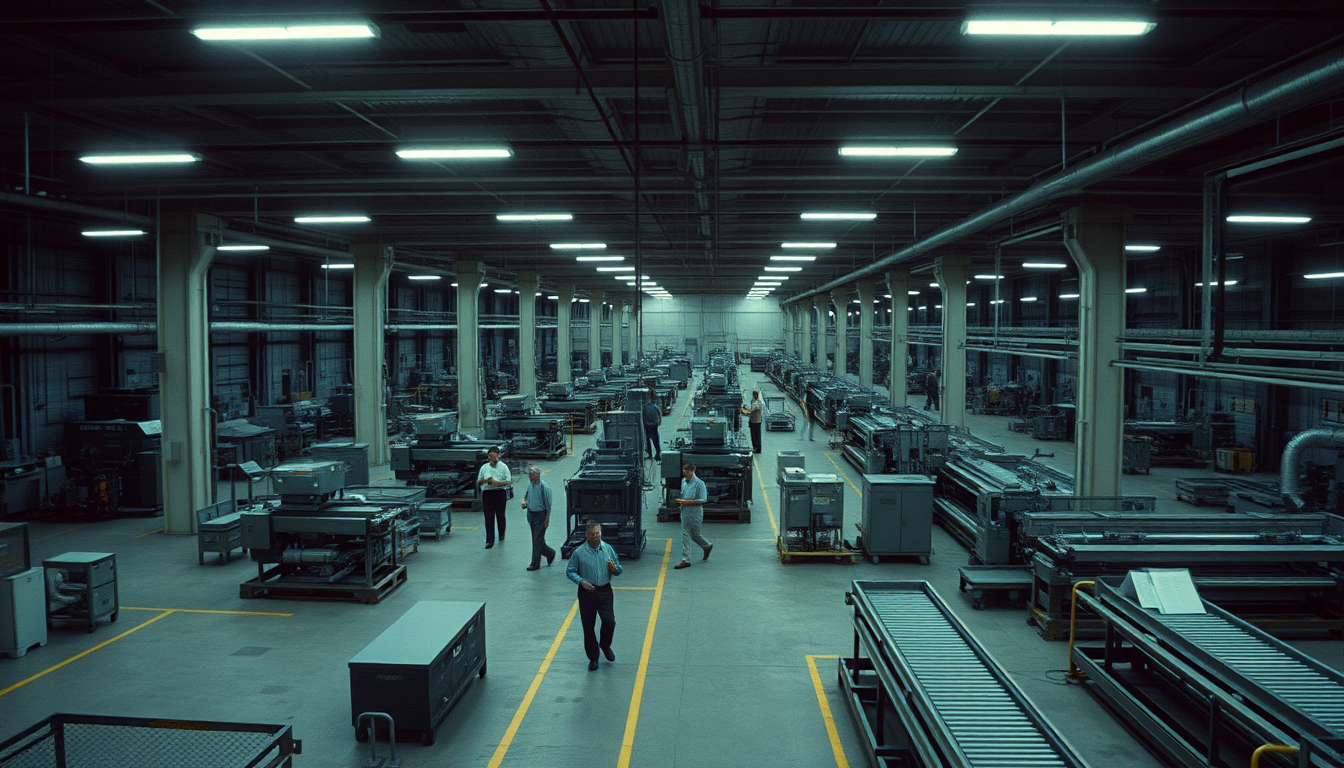
- The plant photo. A real photo of one of our existing customers' factory floors. Not a stock photo of a glowing data centre. The picture sold the product.
The lesson from fifty-six meetings: industrial buyers don't buy technology. They buy a thing that fits inside the operation they already run.
We came home with three signed pilots, eleven warm leads in active follow-up, and a slide deck that's roughly half the length of the one we arrived with. The other half got cut on the train back from Stuttgart.